The Necessity Of Situational Leadership Training

The Necessity Of Situational Leadership Training

Situational leadership is a necessary component of good management practices yet it is still severely underrated by most companies. 

Situational leadership training focuses on ensuring that managers are cognizant of its importance and implement it accordingly. People think of leadership as absolute when it is completely situational. A leader who performs excellently in one situation may end up crashing and burning on another situation. 

This is why a manager may succeed beyond expectations in one company but when they join another organization they turn into mediocre managers. Understanding that different types of leadership are required in different situations is the key to ensuring that your company is always being taken in the right direction.  

Every Leadership Style has its Own Special Qualities


Different times require different leadership. For example, when the company is doing well, your organization will need a leader that can ensure that growth keeps happening and investments are made in the right direction. 

On the other hand, if the organization is facing a hard time, you need a leader that knows how to focus on the core business and get rid of distractions. Similarly, if your company is growing then you need a leader that specializes in growing companies. 

There’s a reason most startups end up changing their CEO once the company is established properly. Someone who works very well when the company is an underdog may not be fit for the job once the company needs to act like a big organization.

Situational Leadership Training Allows Managers to Understand the Type of Leadership Required


Sometimes you end up seeing great management lessons from the most unexpected of sources. A superhero movie has the dialog, “He's the hero the city deserves, but not the one it needs right now.” 

which perfectly encapsulates the need for situational leadership. The hero being talked about is a good hero but the speaker realizes that the current situation of the city doesn’t need the hero; it instead needs a different type of hero that follows the rules to the city goes back to running according to the rules.

This is the core idea behind situational leadership. The training for this leadership focuses on ensuring that the leaders understand that their default method of leading the company may not be good enough for the current situation the company is facing. They need to change the way they work and make other people work.

Situational leadership is a concept that is respected in the military. The military knows that the type of leader that leads the battle on the field is very different from the type of leader that makes the plans for the battle. The military has perfected leadership over the years and they focus on creating different types of leaders that can deal with different situations. 

A full-scale attack will require a different type of leadership when you compare it to a stealth operation. It is time that organizations learn the same lesson if they want to succeed.

Situational Leadership Training That Works

A cartoon business leader is going in one direction while 4 robots are going in the other

Some leaders are totally out of sync with their company’s strategy and their employees’ needs. They don’t know how to communicate effectively or how to influence their direct reports toward more productive behavior and performance. Be wary if you notice your leaders and followers moving in opposite directions with no clear goals in sight.

Leadership training for these leaders may be the answer…but make sure it is a program that actually produces results. Investigate situational leadership training. We have seen it work again and again.

The situational leadership training program teaches new and experienced leaders how to design the best strategies for working with their team to achieve desired outcomes. They learn how to diagnose and manage the motivations, abilities and performance of their team members and then utilize the leadership style that would be most effective for that situation. Done right, there is an emphasis on real-world scenarios and hands-on practice focused on the situations that matter most for you.

Rather than working with their direct reports using a one-style-fits-all approach, situational leaders learn which style would be most effective with each individual according to the specific situation. A follower who is struggling with a certain task may need more careful supervision and direct instruction. But a follower who is able and motivated in a certain situation may simply need to keep the leader informed of their progress.

The statistics are telling. For example, a retail industry holding company that trained over 1,500 store managers was able to exceed retention goals and meet revenue generation targets. At a global services and technology company, those who had attended the training outperformed the control group (without training) by 24% of the productivity targets that had been identified as significant. Additionally, there was over 15% less turnover on these teams. And, in an entirely different industry, a follow-up survey at a global pharma company found that from about 60-90% of direct reports said that there had been noticeable positive changes in their leaders’ approach to coaching and leading.

If you need to boost the skills of your managers, and in the process boost the productivity and satisfaction of your employees, check out situational leadership training. It can make the difference you are looking for.


6 Ways Situational Leaders Spot the Learning Opportunity

An hour glass with sand pouring through

Good management is all about taking advantage of each situation as a learning opportunity…for you as well as for your followers. That’s what we highlight in our situational leadership training. Learn to spot and assess the situation…then act appropriately to guide your team members’ development.

And what about your own learning? Being a good leader and manager is not easy. It takes dedication to the team and a focus on how to lead that team to the goals that you all have set. Over three-quarters of team failures are due to ineffective managers. Their success and yours depends on your knowing how to manage well. 

Based upon lessons from over twenty years of situational leadership training programs, here are the top six things you need to do to be a smart and effective manager. 
  1. Be an effective communicator
    As a situational leader, it is critical that you clearly establish roles and responsibilities. There should be no question about what each team member needs to do to pull their weight and contribute to the overall goal. 
  2. Hold yourself and team members accountable
    Situational leaders set the standards of behavior and make performance transparent to all. When team members excel, they should be appropriately recognized. When their performance falls short, there should be an immediate response to support improvement. 
  3. Care about the individuals on your team
    The best situational leaders and managers are invested in the success and growth of their employees. They know the motivators, strengths, and ambitions of each. They recognize that their role is to marshal the team through its individual members to reach as high as they can. Good managers provide development opportunities so their followers are challenged to grow.
  4. Be a hands-on situational leader
    Good managers get involved. They set the example of hard work and open communication. They insist upon an environment of mutual respect and cooperation because they know how critical a trusting culture is to team success.
  5. Make good decisions
    No matter how strong a team, there will be conflicts. A good situational leader knows how to listen, assess the situation and sensitively, but positively, decide how to move forward. 
  6. Be straightforward
    Team members appreciate being well informed. They want to know how well the company is doing and what plans there are for the future. When change is needed, it is important for managers to communicate the rationale behind the change and guide their team toward behavior that supports the organization’s business strategy.

4 Problem Solving Best Practices to Embrace

a man is standing at a fork in the road: one sign points to "Solution" and the other sign to "Problem"

Some say that a leader’s main job is to solve problems. If that is true, the best leaders know how to solve problems most effectively. As part of our customized situational leadership training, we often closely examine best practices of problem solving. 

Here is what we have learned:

  1. Make sure all thoughts and ideas for solutions are welcome and fairly considered. 
    Unless problems are analyzed from all sides, you may well miss the most effective solution. Teams need to encourage everyone to speak up freely. Root causes may not be fully explored if communication is squelched or discounted. It is up to the leader to provide a setting where employees trust that blame is not the objective…solving the problem is.

  2. Establish a corporate culture where employees navigate freely across functions.
    Silos prevent free and open communication and are often the cause of problems…Team A does not know what Team B is doing. Each group becomes protective of their territory and progress toward enterprise-level goals can be blocked. As a leader, seek to break down cultural and functional silos and re-establish common goals. Make knowledge sharing the standard so teams can spot areas where collaboration will eliminate duplication of effort and drive performance more effectively.

  3. Look for and hire employees who value diversity and open communication.
    For a broad array of views on root causes and alternative solutions, build an organizational culture where different backgrounds are celebrated and respected. A corporate culture where everyone thinks alike is one where innovation suffers. Make sure your recruiting team and hiring managers know what to seek in job candidates for them to thrive in your culture. These values become the lifeblood of your problem-solving environment and long-term organizational health.

  4. Alignment of strategy, culture and talent is the key to success.
    An alignment problem solving framework can help to ensure that your root cause analysis and approach occurs at the right level.  For example, start by examining if the strategic objectives and goals related to the issue are clear, believable and implementable enough to the concerned parties.  If they are not, there is probably not much reason to dissect organizational or team issues until the objectives are clear.  If things seem clear at the strategic level, begin to investigate culture-based issues regarding success metrics, performance exposure mechanisms, rewards, communication, roles and accountability combined to see if there are any weak spots.  Then discuss if the issues are related to your ability to attract, develop, engage or retain talent.  This strategy, then culture, then talent thought process has helped hundreds of leaders solve problems faster at the right level.

When leaders come to view problems as opportunities for continuous improvement, individual employees, teams and the company as a whole will benefit.


A Leader’s Responsibility is to Create Accountability

a cartoon of 3 businessmen at lunch with one saying, "I start my day by making a list of everything I need to do...and who I can get to do it for me."

Ah, wouldn’t it be easy just to tell people what to do and then go off to lunch with friends?  

The leader in this cartoon seems to think he’s an expert at delegating…after all, he has left a list of to-do’s for his team. But we would say in our situational leadership training that he has, in many ways, forfeited his true responsibility as a leader. He has not remained available for his followers’ questions and concerns. He has left the “scene of the crime” without someone in charge to solve problems and guide team members. And he has probably not set clear expectations or worked toward shared commitment. He is acting more like a dictator than a true situational leader. 

One of the basic tenets of great leadership is maintaining accountability. And this holds true for leaders as well as followers. Leaders should be accountable for achieving their team goals. Followers should be held accountable for achieving their individual goals…goals that were established in discussions with their manager in the context of what the team needs to achieve. There is, however, an additional wrinkle. It is the manager’s responsibility to make sure the team members are committed to delivering the desired results. It is the manager’s responsibility to make sure the team members have the competence required to deliver the desired results in a way that makes sense.

The best leaders understand that they can’t hold workers responsible for a task they don’t know how to do – i.e. a low level of competence. This is when managers must offer opportunities for development and be ready to coach and supervise as the employee begins to practice the new skills. In this situation, the leader is accountable for the employee’s performance.

By the same token, when an employee has the skills, they are the ones who should be held accountable. Their leader recognizes them as able and gives them the right to personal accountability. This means that given the task, they can figure out how to accomplish it without their manager’s active engagement and frequent check-ins.

With this in mind, let’s take a second look at the cartoon. It is possible that the speaker has effectively trained, developed and coached his team in a way that they are ready to take on their own accountability. If so, he does not need to micromanage and deserves a break with his colleagues.

Learn more at: http://www.lsaglobal.com/situational-leadership-training-consulting/

How To Unlock Your Potential as a Leader

A businessman pulls aside his jacket to show a superman costume underneath

What distinguishes superstars from the rest of us who do our work diligently but don’t seem to rise above the crowd? 

Situational leadership training experts say that it is not their leadership skills as much as their ability to align themselves seamlessly with the company and its goals. They seem to have a kind of X-ray vision…they take advantage of every opportunity to solve important problems and make themselves useful and appreciated. They have the mindset of a “superman” who is always ready to step in when needed and knows what to do to advance the company’s collective path toward success.

Let’s take a look at how these superstars behave that attracts notice from their peers and their superiors alike and that casts themselves in such a favorable light.

  1. They are in sync with their environment. In other words, they work where they fit…where their values are a good match for the corporate values and beliefs of the company. They fit culturally and, as a result, their natural behavior is noticed and appreciated because it embodies the desired corporate culture and is modeled by company leaders.

  2. They have both a strategic and tactical view of their work contribution. They know clearly what they must do on a daily basis to achieve their personal performance goals; but they also keep an eye on how what they do contributes to the whole. They understand not just what they have to do but why it matters. This gives them the systems and strategic perspective of a leader who can anticipate before others on their team what needs to be done and why.

  3. They have empathy. They tune into what others are feeling and what others want. From this perspective of understanding and caring, they are able to pitch in to help their teammates as well as to support their boss’ success. They simply seem to know how to help others work well in a way that makes sense personally and professionally.

  4. They manage their time effectively. They seem to be able to accomplish so much more than anyone else on the team with far less stress. If you ask them how they do it, they are likely to say that they spend a few minutes each day to prioritize their schedule and approach based upon the situation. They work on the most urgent and important items first and then proceed down their to-do list in a methodical and focused way. They avoid distractions and don’t try to multi-task. They understand how to be present and focus on what matters most.  They do this while balancing short-term performance and longer-term health.


How to Transition from Boss to Situational Leader

a businessman is in front of a chart that compares a boss to a leader

When you want to grow from managing people as a “traditional boss” to truly leading people, there are a lot of changes you will need to make. Most importantly among them are 5 leadership skills that will set you apart. They are skills that have been found missing in leaders in almost every situational leadership training program that we have delivered over the last 20 years.

Before you begin reading the list, take stock of what you think are your personal strengths and weaknesses.  Be aware of your own limitations and be determined to improve. Ask for and be open to feedback from coaches, colleagues and subordinates. True leaders are willing to admit their shortcomings and are open to learning how to improve.

Here are 5 overall leadership skills that you can learn about in situational leadership training that will prepare you both for managing effectively (unlike the stereotypical “boss” described above) or for leading effectively:

  1. Motivate
    The best leaders understand what spurs their followers toward dedicated action. They know how to delegate and take advantage of what their employees like to and do best. They encourage and manage performance in a way that increases their employees’ discretionary effort and engagement.

  2. Inspire
    A gifted leader knows how to create a vision that inspires others to help realize it. Employees commit to their leader’s goals for the organization and know that their contributions are fully recognized and appreciated.

  3. Adapt
    Skilled leaders know that a big part of their job is to manage change effectively. They need to be able to communicate the reasons for change, overcome any resistance with the strength of their personality and example of commitment, and implement their change strategy with a positive and encouraging attitude.

  4. Plan
    Leaders are masters of strategy. They look at the big picture and then are able to translate the overall goals into steps to get there. They know what moves to make and they make them.  Their strategies are clear, believable and implementable.

  5. Develop
    Strong leaders believe in their people. They provide learning and career development opportunities for employees to learn and grow. Feedback and performance coaching become their tools for development, and their own commitment to continuous learning serves as the model.

Situational leadership is based on the premise that leadership is learned step by step as learners recognize the readiness and willingness of their followers to improve. How ready and willing are you to take that big step from manager to leader?

Learn more at: http://www.lsaglobal.com/situational-leadership-training-consulting/

A Modern-Day View of Situational Leadership

Cartoon of wo women walk along the street. One has a man hanging on to her ankle. She explains to the other: "A good team leader inspires intense loyalty."

The cartoon may be a bit extreme but it does illustrate how much our view of successful leaders has changed. It used to be that leaders were to be feared. They led powerful armies, built their empires through force and then secured them by the strength of their personalities. Think of Genghis Khan, Caesar, and Napoleon.   These infamous leaders are mostly remembered as ruthless, egotistical, charismatic and driven by short-term gains.  Genghis Khan, for example, cold-bloodedly conquered and ruled the most continuous empire in history - a self-made kingdom of nearly twelve-million square miles which survived for nearly seven hundred years.  

But times change.  Today’s effective leaders are very different. Their power comes from a different source. They don’t conquer with weapons of war. They lead with a different kind of strength.

Servant Leadership.  Instead of expecting to be served, the best leaders feel a mission to serve their constituents.  Successful leaders rely upon their teams to get things done. They know they can’t succeed on their own. They need the collaboration, accountability and commitment of their employees. 

Today’s best leaders don’t inspire through force but through trust. Because their employees believe in their integrity, leaders are able to lead. They are respected because they deliver on what they promise. They look out for their teams and their teams respond by looking out for them.

Likeable Leadership.  Recent research seems to support the belief that effective leaders are generally  liked by those in their organization. We all know it is easier to work hard for someone you appreciate and admire than for someone you dislike. As with any relationship, you feel more engaged and committed when you are with people you want to spend time with. So forget the domineering, hard-hearted, even cruel boss. The studies show that hated leaders have less than a .05% chance of being effective. 

Developmental Leadership.  Good leaders know how to develop others. Somewhere along the line they must have been exposed to the tenets of situational leadership training. They have a facility for recognizing strengths in their followers and providing helpful feedback. They seem to know intuitively how to motivate their followers to ever greater achievement. They know how to set clear expectations and then provide the resources needed to accomplish the tasks at hand. 

Personally, we prefer the more modern style of situational leadership. How about you?

Learn more at: http://www.lsaglobal.com/situational-leadership-training-consulting/

3 Tips on How to Up Your Game as a Leader

Cartoon of a businessman talking to an ancient Egyptian saying, "I'm sure the Pharaoh was a great guy, but I've got my own leadership style."

Sometimes it’s not your leadership style that needs to change as much as your ability to flex from one leadership situation to another. In fact, that’s what situational leadership training is all about. The proven program helps leaders understand what their followers need in order to be successful. Leaders learn how to assess and manage their followers’ performance, make the best use of their talents, and harness their motivations in each situation with an eye toward desired performance results.  In sum, it helps leaders up their game.

Are you at a point as a leader where you realize you need to operate differently in order to optimize your team’s performance and your overall influence as a leader? If so, you will need to let go of some of the previous behaviors that were not serving you well and you will need to pick up new leadership behaviors that will serve you and your team better in the future. 

Here are three situational leadership tips to transform yourself into the leader that you want and need to be:

1. Know yourself.
Be clear about how you dealt with your followers in the past: what worked and what didn’t. If you were autocratic, you may have destroyed your followers’ motivation to think on their own. If you micro-managed, you may have taken away their desire to solve problems independently. If you were lackadaisical, you may have missed opportunities to pull the team together and work collaboratively toward a common goal. Figure out just what you want to change in your behavior as a leader and what you hope to achieve as a result.

2. Tackle the challenge a little at a time.
Don’t undermine your success by trying to achieve too many changes at once. Perhaps you can begin by trying out new leadership behaviors with one team member at a time. For example, how about choosing the new employee you micro-managed to the point where they don’t dare do anything without your specific approval? Make sure they understand your expectations for the job and then be straight with them. Tell them it has been hard for you to give up control of the details but that you trust them to do a good job. Stay available for questions but back off otherwise.

3. Reflect on your progress.
If it helps to keep your eye on the prize, keep a journal of the situations in which you have tried a different way of leading. How did you behave? How did your employee react? What were the results? What is working?  What is still a struggle?

With a steady commitment to your goals and thoughtful reflection, you will become the leader you want to be…situation by situation.

Learn more at: http://www.lsaglobal.com/situational-leadership-training-consulting/

How an Investment in Front-Line Leaders Pays Off

one duck walks on the curb while 5 other ducklings on the street below

This is a perfect picture of a newly promoted manager. Once part of the team, the duck still looks just like the others but has suddenly been given higher status. Will the new leader jump back down and blend in or will new ways of behaving inspire and lead the team forward from a different vantage point as they grow?

Do not expect new managers to learn how to lead others well on their own. They need help. Situational Leadership Training for example, can provide some great foundational management skills to help new managers transition from an individual contributor to a role where success is measured by the success of their team. Managers are the ones who have a major impact on employee engagement; they are the ones who translate senior leaders’ strategies to the teams who must implement them.  The better they are at leading, the more likely employees will perform at their peak, the less likely employees are to quit, and the greater chances of important corporate-wide initiatives being effectively implemented.

Here is why your investment in front-line managers will pay off. They learn how to:

Delegate effectively
Effective front-line managers know the strengths and drivers of their team members, match them to job roles, inspire ownership of the work to be done, and get the best from their people.

Drive better results
With targeted training, smart front-line managers are better at thinking strategically. By thinking through to the goal and planning how to reach it, they are able to articulate a clear and compelling vision that inspires their people to commit to doing high quality work that matters most.

Set a standard for behavior
The best front-line managers set a high performance standard for both results and behavior.  They know how to coach their followers to ever higher levels of performance to get more than the sum of the parts of their team.

Be and hold others accountable
Knowing how to take responsibility for their own behavior and the results of others, well-trained front-line managers can build a culture of trust. This, along with clear and transparent success metrics and aligned roles, creates the foundation for high performing teams.

Do not leave the training and development of your front-line managers up to chance. The risk to the organization as a whole is too great in terms of turnover risk, employee disengagement and missed targets. The investment you make in developing your new managers will pay off many times over in productivity, and in motivated, engaged employees.

Learn more at: http://www.lsaglobal.com/situational-leadership-training-consulting/

Situational Leadership: Hire, Support and Reward “Adapters”

A businesswoman is facing a huge drawing of a compass to choose the right direction

As a leader, it is your responsibility to provide clear and compelling direction to your followers. They look to you to articulate the company goals, define the organization’s values, and set the course toward a successful future. It is, then, the followers’ responsibility to walk the path that has been set. But sometimes there is a disconnect between the leader’s expectations and the followers’ execution.

Most successful leaders are really good at asking for clarification, admitting mistakes and striving to learn and grow. That’s why they don’t understand the psychology of many followers who suffer from a lack of self-confidence that undermines their being able to accept and make good use of criticism. Followers generally avoid admitting they need help or owning up to their faults. 

It all goes back to situational leadership training. The disconnect between what leaders expect and what followers deliver has enormous implications for effective performance management and coaching. Before you provide feedback as a leader, you should evaluate a follower’s readiness to receive coaching, reflect and act upon it. “Unready” followers may see their need for coaching as acknowledgment of weakness or inability. Criticism offered in this situation will not have the desired effect…instead of encouraging improvement, it will serve only to shut down the follower to any effort and highlight their feelings of incompetence.

So what’s a leader to do?

1. Show your genuine willingness to support your team. Help them see that you believe in their potential and that they are worth the company’s time and investment. Help them understand that coaching is not intended to point out something they have done wrong but to show them another, better way. Your followers with openness to learn, change and grow are your company’s greatest asset.

2. Hire and reward employees who seek learning opportunities, the so-called adapters. From their point of view, being coached is an opportunity to improve and they are ready and eager to do so. When you interview, ask candidates questions about how they liked school or what they appreciate about training. Studies have shown that older workers and adapters are much more open to coaching by their leaders than younger and less flexible, less confident employees.

The more coachable your followers, the more learning and growing they will do. As a leader, create an environment where coaching is welcomed and a team where readiness is a constant state of mind.

Learn more at: http://www.lsaglobal.com/situational-leadership-training-consulting/

3 Common Decision Making Traps Leaders Should Avoid

A businessman stands next to a maze and does not know how to begin walking through

One of the key skills taught in situational leadership training is how to make effective decisions. Sound decision-making is a critical trait of great leaders. No one said the process is easy…there are so many factors to consider and multiple paths to take…and it is not without risk. Be wary of the common traps that drive you in the wrong direction in the challenging maze of decision making.

Here are 3 biases that can steer you wrong:

  1. OverconfidenceIf you have been lucky so far in the choices you’ve made, you may have to fight the bias of overconfidence. It can lead you to decide prematurely. Far better to look at all the data, especially those that contradict your thinking, and to listen thoughtfully to alternatives to your solution.
  2. Over-reliance on first impressionsBeware of weighing first impressions too heavily. You may leap to conclusions that are not accurate. Instead, try to avoid relying too much on the most familiar or the most recent and slow down your thinking process.
  3. Selective filteringIt is only human nature to pay more attention to the information that favors your position than to conflicting data. But, again, this bias can lead you astray. To counteract this tendency, be sure to examine all the information, especially the information that does not align with your opinion.


How Would You Rate Your Management Effectiveness?

Thumbs up for the happy, good employee and thumbs down for the sad, bad employee

Good leaders have a positive impact on employee engagement and therefore on employee performance. Bad managers have the opposite effect. If you are in charge of an organization large or small, you had better take a good look at how effective your managers are so you can predict the success or failure of your strategy.

Here is a breakdown from situational leadership training of what constitutes good and bad leadership from the point of view of the people who managers lead.

Bad managers…
Are out for themselves, neglect the team and do not support their followers.
Over-monitor their team members and nit-pick their every move.
Don’t care much about their own work and do as little as possible.
Lie to their workers and probably just about everybody else.

Good managers…
Admit their mistakes and are not afraid to show some vulnerability.
Care about their employees and regularly check in on how they are doing.
Are supportive, encouraging and recognize effort and growth.
Lead by example and with confidence.

On which side do your leaders fall?

Learn more at: http://www.lsaglobal.com/situational-leadership-training-consulting/

The Best Leaders Work Differently

A picture of a big shoe and a small shoe that, as Situational Leadership training shows, no longer symbolize leadership practices of a domineering boss

The best leaders are no longer the ones with the biggest shoes that dominate all the rest of us. The best leaders work differently. They don’t bully and dictate; they create strategies that inspire, cultures that maximize performance and talent that drives toward excellence.

Situational leadership training brings the qualities of top leaders to the fore to be observed, practiced and adopted. A few attributes that differ from the former leadership styles are:
  • TransparencyNo longer working in an ivory tower, top leaders  share key information with their executive team as well as with the work force so all can pull in the same direction and support one another.
  • AccountabilityAll are held accountable for performing to agreed-upon expectations. And if low performers do not improve, they are re-assigned or dismissed. Tenure matters less than performance because poor performers undermine the motivation of even the highest of performers.
  • Constructive DebateNew ideas are welcomed. The best leaders appreciate challenges to the status quo and foster an environment where discussions are open.
Learn more at: http://www.lsaglobal.com/situational-leadership-training-consulting/

Good Leaders Grow Their People


One of the signs of a good leader is the people they grow. 

As a people manager it is all too tempting sometimes to rely on those few who always deliver…the ones you can count on to do the job well and on time. But you have a responsibility to all of your direct reports. If you rely on just a few, not only may they be overwhelmed but you also may well have ignored others with great potential.

Know your team and apply the lessons from situational leadership training. 

  • As tasks need assigning, take stock of all your direct reports…their skills and their readiness for new challenges. 
  • Expand your circle of “go-to’s” and give others a chance. 

They may need extra guidance at first but you owe them a chance to prove themselves and to grow. This is what the best leaders do…they motivate their followers to greater effort and learning.

Learn more at: http://www.lsaglobal.com/situational-leadership-training-consulting/

Why It Is OK for Leaders NOT to Have All the Answers


Many leaders mistakenly think it is in their job description to have all the answers.

Not so, say situational leadership training experts. In fact, the best leaders know that false confidence can breed confusion and mistrust. And if you are not clear and do not have the trust of your employees, how can you hope to lead and inspire them?

Surprising to many new leaders, your credibility as a person is partly a result of your transparency and vulnerability. Yes, your employees look to you for guidance and need to know you are competent and confident in your role. But if you cannot accept a bit of uncertainty and own up to it, you will quickly lose their trust.

No one can predict the future. There is always risk. Overconfident decisions are likely faulty ones. It is far better to confess that there are several possible outcomes of your decisions than to pretend the future is certain.

Be open, honest and agile. This is the sign of a true leader who believes in what can be done and can adjust to changing realities in order to achieve the goals that have been set.  

Learn more at: http://www.lsaglobal.com/situational-leadership-training-consulting/

Making Leadership Training Personal


There is no such thing as a leadership machine. There are leadership training programs and books on the subject; there are the leadership traits that one learns from life experience; there are some lucky few people just born with natural talents for leadership. And there is another way to grow leaders…coaching them personally situation by situation. 

This kind of situational leadership training depends upon your being able to be very specific about the behaviors that you and your organization want to see in high performing future leaders. It is not just enough to say that integrity, for instance, is fundamental to leadership. You need to be specific about the behaviors that demonstrate the critical leadership trait of integrity for your unique business strategy and corporate culture.

For instance, if your team has just uncovered a defect in one of your products, how should a leader with integrity handle this? Talk about this with the group. Set the standard and model the kind of reaction that shows you are prepared to deal with the problem openly and honestly. Demonstrate the behavior that proves integrity.

Learn more at: http://www.lsaglobal.com/situational-leadership-training-consulting/

Lead and Let Go of the Minutiae to Empower Your Team

Lead and Let Go of the Minutiae to Empower Your Team

Are you the type of boss who hovers and tries to monitor each and every minute detail of your team’s work?

Then you are in serious danger of stifling the creativity and motivation of your team members. No one wants to be second-guessed and to have a manager watching over their shoulder all the time. If you are that manager, let go of the minutiae, all the post-it note reminders of how you think they should proceed and give your team members the space to learn, grow and innovate.

Situational leadership training proposes an excellent strategy for dealing effectively with different levels of readiness for your guidance. Some followers need regular supervision; they depend upon structure and the approval of the boss. Others are more independent and flourish when left alone. Of course, all need clear expectations of what you look for in the way of desired results and how it fits into the overall strategic plan. But many prefer to find their own path to desired outcomes…checking in with you only with occasional questions or when obstacles arise. These are the followers who will excel because they are motivated to learn and improve. Give them the opportunity to do it on their own!

Learn more at: http://www.lsaglobal.com/situational-leadership-training-consulting/


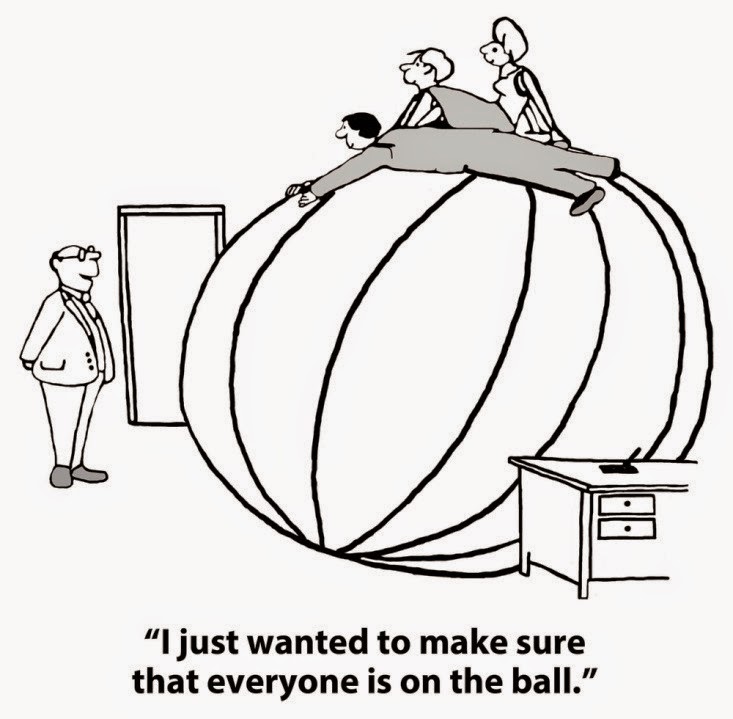
One Way to Keep Your Team On the Ball

One Way to Keep Your Team On the Ball

Every team leader wants to know that their team is engaged in doing what they need to do to succeed. It may not be as hard as you think to keep their focus on what is important. From situational leadership training, here is one easy way to help them prioritize their activities and stay on the ball:

  • The Top 3. Meet individually with your team members to establish the three activities or tasks that are the most critical for their job success.

  • Skills Required. Assess whether or not they have the skills to accomplish those tasks. If not, set up a plan to build those skills or shift their job assignment to one that is better suited to their strengths.

  • Time Management. List the top three tasks and agree that three-quarters of their workday should be devoted to those activities.

  • Progress Check-Ins. Reassess on a regular basis to update the “list of three” and share how the plan is working.
Learn more at: http://www.lsaglobal.com/situational-leadership-training-consulting/

Situational Feedback that Works

Situational Feedback that Works

As a team leader you have an enormous responsibility to help your team learn, grow and perform. You can provide training that will introduce them to new skills. But training by itself will not make much of a difference in their performance. In fact, our research shows that only 1-in-5 people change their behavior from training alone. For new skills to become habitual and turn into new performance, they must be applied on the job, coached, encouraged, reinforced and rewarded. This is where you come in as a leader…

Situational leadership training provides excellent models for providing effective coaching and feedback according to the style and readiness level of individual followers. In general, complimentary feedback is easy to give and a pleasure to receive. When a job is well done, say so! Be specific!

However, when a job is not well done and there are behavioral or performance issues to address, feedback is often difficult to give and, very likely, unwelcome. It is your job as a leader to see that team members meet expectations. To do this, they need to know where they stand. Giving clear, constructive feedback is critical to their success and your success. And it should be done immediately, specifically and privately in a tone that is not threatening but encourages further effort and promises support.

When giving negative feedback as a leader:

  1. Ask for permission to give feedback

  2. Stick to the facts. Do not jump to conclusions or make faulty assumptions

  3. Be specific about the behavior change that you want to see, why and by when
Learn more at: http://www.lsaglobal.com/situational-leadership-training-consulting/